Hello all,
Here is the blog post for discussing your reading and teaching of a YA nove (to be completed by 3 October, Wednesday). Post as comments under this blog post.
After reading your YA novel, share if it is something that you would use in the secondary classroom. What are its potentials as well as pitfalls? Some guiding questions:
(1) How would you categorize this text (popular culture, classic etc)?
(2) Would you teach it to a lower secondary class? Why or why not?
(3) What are its possibilities as a set text? (e.g. thematic possibilities, areas of study, values education etc.)
(4) What problems do you foresee with introducing the text at lower sec?
Please feel free to include other thoughts about your reading and your thoughts on text choice and instructional practices.
Readings:
Applebee, A. N. (2000) Creating continuity and coherence in High School literature curricula. Research in the Teaching of English 34, 396-429.
Loh, C.E. (2009) Reading the World: Reconceptualizing Reading Multicultural Literature in the ELA classroom in a Global World. Changing English 16:3, 287-299.
NOTE: Other readings in course outline pertain specifically to The Boy in the Striped Pyjamas.
Sunday, September 23, 2012

Tuesday, September 18, 2012
Jason's E-Learning Assignmet
(Whoops; forgot to post this from draft format from long ago!)
When it comes to poetry, I am an image-driven reader. For the longest time ever, I was interested in the intersection of photography and poetry (also known as photo-poetry); the picture and the poem are always related, but are never the same entity -- they simultaneously exist on different planes of meaning while gravitating towards and altering each other...
But that is a story for another time. Coincidentally, photo-poetry is also an incredible way of teaching imagery by providing a visual anchor for students as they embark on the poem. Most of such materials exist in hard-copy, but here are several online photo-poems that are great starters!
The first one is photograph and poetry by Lenore Horowitz. This resource would be good for introducing the concept of imagery to Lower Secondary students: the planes of meaning between photograph and poem are very close (ie both the image and the poem convey pretty much the same idea/message/notion); the poetry is not anything groundbreaking, but the pairings of photograph and poetry does perform the role of explaining each other quite adequately.
This photo-poem by Helene Fischman goes one step further by introducing personification to the interplay between poem and photograph. The poem itself is more dense, allowing for deeper levels of reading; the planes of meaning between poem and poetry are detached enough to allow for a greater number of possibilities in interpretation. Recommended for a Secondary 2 / Secondary 3 class.
This collaboration between Jillian and David Pattinson has brought about a striking photograph and an equally striking poem. The planes of meaning that the two elements operate on is on the level of the abstract; there is the process of addition and subtraction of meaning that is unique to the form of photo-poetry. It invites interpretation while resisting definition by maintaining a strong sense of ambiguity. A great poem to be used for the high-caliber upper secondary student or as introductory material to a Junior College student.
Monday, September 17, 2012
Jason's Reading Biography
It all started with Roald Dahl’s Matilda; after almost two decades and three house moves, the book by still sits on the bookshelf above my desk. It always occupied (and still continues to occupy) the prime location in my collection: leftmost slot on the bottommost rack. The original is long gone, of course – and through the years I bought several copies of the same book; I would come to some point where I thought I had outgrown its content and give it away, but each time I had done so I would never fail to purchase another copy on impulse when I was browsing at the book store.
I remember bringing the book to English class for show and tell when I was in upper primary, and I remember being asked to share why I liked the book. I remember that I stood up awkwardly and said: “The drawings.” My teacher asked why. “Because they are pretty and they make me feel happy.”
All of this is important: because beginnings are important – you never really leave behind what you start with.
My first formal encounter with a literary text was doing Julius Caesar in Secondary School. It is significant because it was the very first text that made my hair stand on end. As a student, the inaccessibility of the Shakespearean English was daunting, but there was also the thrill of working towards understanding the text, unlocking the different levels of meaning. It was like a puzzle box – if you tried hard enough, you could get it open and savor the treasures within. Julius Caesar was the moment I fell in love with Literature; because it was at the moment I learnt that the payoff was not only the intellectual stimulation that Sherlock Homes provided, it could also operate on the aesthetical and emotional level. There’s nothing quite as powerful as the invocation of pathos that leads into the act of catharsis. If there’s one reward I crave in the act of reading, it is to experience the moment where all your hair stands on end.
This passion solidified in the following years in Junior College, where I pursued the bard through Othello, King Lear and my all-time favorite: Antony and Cleopatra. The Shakespearean tragedies were of special significance to me, because through learning about the rise and fall of the tragic heroes I learnt what it meant to be honorable, what it meant to have a character flaw, and what it meant to make a mistake and have to pay for it. All in all, I learnt what it truly meant to be human. Much as how I benefited from learning the works of the bard through my schooling years, it is my wish that he remains on the required reading lists of generations of students to come. There is still no one who is able to encapsulate the human condition into a study of our humanity quite as succinctly as he did in his plays.
My course in English Literature at University exposed me to a wide range of works across the literary canon. I found myself drawn to the works of Gabriel García Márquez, starting first with Love and Other Demons, before moving on to Love in the Time of Cholera and One Hundred Years of Solitude. I was enamored not only by his brand of magic-realism, which seems to bring an added dimensions into perceptions of everyday life, but also in his intoxicating narrative style and his ability to render narrative landscapes in startling detail. Márquez taught me that there was magic in the everyday – if only you knew where to look for it.
Subsequently, I was exposed to the work of John Banville, reading The Book of Evidence and The Sea. Where Márquez painted vast narrative landscapes in great detail, Banville captured poignant portraits painted in watercolor. His books brought back the notions of pathos and catharsis through a prose style so lyrical you could feel the rise and fall of cadences on each line as he explores themes of love, loss and desire. My experience with Banville piqued my interest in Irish Literature, which led me to pick Ireland as the destination of choice for my exchange program. There, I fell in love with James Joyce; reading Dubliners, The Portrait of the Artist as a Young Man, Ulysses and Finnegans Wake under guidance through the semester. The allure of Joyce was not only from the intellectual frames of his work, but also the way the words as an embodiment of Irish culture and psyche. My contact with Joyce also brought around the concept of the musicality of literature to my attention -- the work both references musical pieces while being in itself musical.
My experiences with Joyce also acquainted me with narratives of the everyday and the mundane. Upon my return, I picked up Honoré de Balzac’s Eugénie Grandet and Le Père Goriot, finding their unrelenting realism and their multifaceted characters (whose moral ambiguities and complexities cast them as fully human) an intriguing study of human society. Seeking a more philosophical exploration of the human psyche, I then turned to Milan Kundera, reading The Book of Laughter and Forgetting, The Unbearable Lightness of Being and Immortality in quick succession.
Then, intrigued with the rendering of human desire in fiction, I read Valdimir Nabokov’s Lolita and Pale Fire, before embarking on Jeanette Winterson’s Oranges are not the only Fruit, Sexing the Cherry and The Passion. In Oranges are not the only Fruit, I was particularly intrigued by the interplay of the alternating chapters of fairy tales placed in between the main narrative, and how elements of both genres seemed to bleed into each other, juxtaposing an inner landscape of dreams and desires against the harsh realities of the world with all its expectations. While the feminist discourse and all their associated theories did engage me during these readings, my true inclinations through the reading of Nabokov and Winterson was to specifically to look at their writing technique. In The Passion, I rediscovered once again my affinity for the lyrical lines and imagery, a particular sublimity that made my hair stand on end. Their power came from the act of tapping on threads that go beyond intellectual stimulation into the realm of emotion -- they are set upon some aspects of the human condition that compel us to intrinsically feel, understand and empathize.
It is with those thoughts that I embarked on a reading of Anton Chekhov’s and Angela Carter’s short stories, which reside on my shelf in massive volumes that I have yet to complete. These short stories appeal to me, because they can border on the fantastical (as with Carter’s take on fairy tales in The Bloody Chamber), or on the realist mundane (as with Chekov’s works), yet they share the same quality of lyrical lines that seem to roll off the page into your mind, and they all illuminate some aspect of the shared human experience.
After my Honors Project, I read Matilda. Again. After all these years, I still quite like the pictures; but of course, this time I could see them existing not only in the illustrations, but also within the words on the page. I also discovered that the reason why they made me happy all those years ago is because as a child I could relate to Matilda, with all her aspirations and her naughty pranks. They make me happy now, because they are a reminiscence of those days, and they serve as a reminder; that for all the theories and the interpretations, it is the aesthetic beauty of the words on the line that brings forth the pleasure of reading and making meaning, things that make Literature what it is for me today.
I remember bringing the book to English class for show and tell when I was in upper primary, and I remember being asked to share why I liked the book. I remember that I stood up awkwardly and said: “The drawings.” My teacher asked why. “Because they are pretty and they make me feel happy.”
All of this is important: because beginnings are important – you never really leave behind what you start with.
My first formal encounter with a literary text was doing Julius Caesar in Secondary School. It is significant because it was the very first text that made my hair stand on end. As a student, the inaccessibility of the Shakespearean English was daunting, but there was also the thrill of working towards understanding the text, unlocking the different levels of meaning. It was like a puzzle box – if you tried hard enough, you could get it open and savor the treasures within. Julius Caesar was the moment I fell in love with Literature; because it was at the moment I learnt that the payoff was not only the intellectual stimulation that Sherlock Homes provided, it could also operate on the aesthetical and emotional level. There’s nothing quite as powerful as the invocation of pathos that leads into the act of catharsis. If there’s one reward I crave in the act of reading, it is to experience the moment where all your hair stands on end.
This passion solidified in the following years in Junior College, where I pursued the bard through Othello, King Lear and my all-time favorite: Antony and Cleopatra. The Shakespearean tragedies were of special significance to me, because through learning about the rise and fall of the tragic heroes I learnt what it meant to be honorable, what it meant to have a character flaw, and what it meant to make a mistake and have to pay for it. All in all, I learnt what it truly meant to be human. Much as how I benefited from learning the works of the bard through my schooling years, it is my wish that he remains on the required reading lists of generations of students to come. There is still no one who is able to encapsulate the human condition into a study of our humanity quite as succinctly as he did in his plays.
My course in English Literature at University exposed me to a wide range of works across the literary canon. I found myself drawn to the works of Gabriel García Márquez, starting first with Love and Other Demons, before moving on to Love in the Time of Cholera and One Hundred Years of Solitude. I was enamored not only by his brand of magic-realism, which seems to bring an added dimensions into perceptions of everyday life, but also in his intoxicating narrative style and his ability to render narrative landscapes in startling detail. Márquez taught me that there was magic in the everyday – if only you knew where to look for it.
Subsequently, I was exposed to the work of John Banville, reading The Book of Evidence and The Sea. Where Márquez painted vast narrative landscapes in great detail, Banville captured poignant portraits painted in watercolor. His books brought back the notions of pathos and catharsis through a prose style so lyrical you could feel the rise and fall of cadences on each line as he explores themes of love, loss and desire. My experience with Banville piqued my interest in Irish Literature, which led me to pick Ireland as the destination of choice for my exchange program. There, I fell in love with James Joyce; reading Dubliners, The Portrait of the Artist as a Young Man, Ulysses and Finnegans Wake under guidance through the semester. The allure of Joyce was not only from the intellectual frames of his work, but also the way the words as an embodiment of Irish culture and psyche. My contact with Joyce also brought around the concept of the musicality of literature to my attention -- the work both references musical pieces while being in itself musical.
My experiences with Joyce also acquainted me with narratives of the everyday and the mundane. Upon my return, I picked up Honoré de Balzac’s Eugénie Grandet and Le Père Goriot, finding their unrelenting realism and their multifaceted characters (whose moral ambiguities and complexities cast them as fully human) an intriguing study of human society. Seeking a more philosophical exploration of the human psyche, I then turned to Milan Kundera, reading The Book of Laughter and Forgetting, The Unbearable Lightness of Being and Immortality in quick succession.
Then, intrigued with the rendering of human desire in fiction, I read Valdimir Nabokov’s Lolita and Pale Fire, before embarking on Jeanette Winterson’s Oranges are not the only Fruit, Sexing the Cherry and The Passion. In Oranges are not the only Fruit, I was particularly intrigued by the interplay of the alternating chapters of fairy tales placed in between the main narrative, and how elements of both genres seemed to bleed into each other, juxtaposing an inner landscape of dreams and desires against the harsh realities of the world with all its expectations. While the feminist discourse and all their associated theories did engage me during these readings, my true inclinations through the reading of Nabokov and Winterson was to specifically to look at their writing technique. In The Passion, I rediscovered once again my affinity for the lyrical lines and imagery, a particular sublimity that made my hair stand on end. Their power came from the act of tapping on threads that go beyond intellectual stimulation into the realm of emotion -- they are set upon some aspects of the human condition that compel us to intrinsically feel, understand and empathize.
It is with those thoughts that I embarked on a reading of Anton Chekhov’s and Angela Carter’s short stories, which reside on my shelf in massive volumes that I have yet to complete. These short stories appeal to me, because they can border on the fantastical (as with Carter’s take on fairy tales in The Bloody Chamber), or on the realist mundane (as with Chekov’s works), yet they share the same quality of lyrical lines that seem to roll off the page into your mind, and they all illuminate some aspect of the shared human experience.
After my Honors Project, I read Matilda. Again. After all these years, I still quite like the pictures; but of course, this time I could see them existing not only in the illustrations, but also within the words on the page. I also discovered that the reason why they made me happy all those years ago is because as a child I could relate to Matilda, with all her aspirations and her naughty pranks. They make me happy now, because they are a reminiscence of those days, and they serve as a reminder; that for all the theories and the interpretations, it is the aesthetic beauty of the words on the line that brings forth the pleasure of reading and making meaning, things that make Literature what it is for me today.
Jodee's Reading Biography
The horrendous Peter and Jane books. Those books represented my first memory with books and even though I read them with relative ease, and my parents were always full of praise for my reading skills, I read the books grudgingly just to please them, but I never found them interesting.
 Growing up, I remember reading whatever I could lay my hands on at
the babysitter's house. She had two daughters who owned a variety of
interesting books. From Enid Blyton hard covers, to comic books like
"Lau Fu Zi" where I difficult time deciphering the chronology of the
images (i still have trouble reading some of the more complex comic
books even till today) to other books like The Bookworm club. I
basically read whatever I saw them reading and as a result was a
constant source of annoyance to them, because I basically poked my head into where it didn't belong - between the book and their line of sight. Later on, I was weaned on a diet of mystery books. Books such as the Famous Five and Secret Seven kept me hanging to every page. It was also around this time where I read Sherlock Holmes and the Hound of the Baskervilles, as well as other classics like Hard Times and The Secret Garden.
Growing up, I remember reading whatever I could lay my hands on at
the babysitter's house. She had two daughters who owned a variety of
interesting books. From Enid Blyton hard covers, to comic books like
"Lau Fu Zi" where I difficult time deciphering the chronology of the
images (i still have trouble reading some of the more complex comic
books even till today) to other books like The Bookworm club. I
basically read whatever I saw them reading and as a result was a
constant source of annoyance to them, because I basically poked my head into where it didn't belong - between the book and their line of sight. Later on, I was weaned on a diet of mystery books. Books such as the Famous Five and Secret Seven kept me hanging to every page. It was also around this time where I read Sherlock Holmes and the Hound of the Baskervilles, as well as other classics like Hard Times and The Secret Garden.
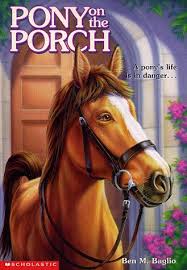 I soon grew to become a voracious reader of both fiction and non-fiction
books because I was so interested in animals. I devoured encyclopedias
on animals ( this was way way before wikipedia) and memorized quite a
lot of facts about them. My parents took me to the library every 1-2
weeks, and each time I left gleefully with a total of 16 books, (using a
total of 4 library cards including my parents' and my brother's) and
reading mostly non-fiction books about how to train dogs, the different
dog breeds, horses and their breeds, guinea pig care, and basically
could identify the breed of any pure bred dog on the streets! At one
point in time my parents had to take me to different libraries because I
had basically finished all the animal books in the pet section of both
the Jurong Regional Library and Bukit Batok Library! Though the basis of
reading these books was mainly to fuel my interest in animals,
especially dogs, my parents still encouraged me to read, though
occasionally tried to point me towards other books in the fiction
section as well. So I picked out Animal Ark, and its stories on how the
main protagonist tries to save various animals in difficult/dangerous
situations was something I could identify with and empathize with. Due
to the influence of these books and my love for animals, one of the
first career aspirations I had was to be a veterinarian.
I soon grew to become a voracious reader of both fiction and non-fiction
books because I was so interested in animals. I devoured encyclopedias
on animals ( this was way way before wikipedia) and memorized quite a
lot of facts about them. My parents took me to the library every 1-2
weeks, and each time I left gleefully with a total of 16 books, (using a
total of 4 library cards including my parents' and my brother's) and
reading mostly non-fiction books about how to train dogs, the different
dog breeds, horses and their breeds, guinea pig care, and basically
could identify the breed of any pure bred dog on the streets! At one
point in time my parents had to take me to different libraries because I
had basically finished all the animal books in the pet section of both
the Jurong Regional Library and Bukit Batok Library! Though the basis of
reading these books was mainly to fuel my interest in animals,
especially dogs, my parents still encouraged me to read, though
occasionally tried to point me towards other books in the fiction
section as well. So I picked out Animal Ark, and its stories on how the
main protagonist tries to save various animals in difficult/dangerous
situations was something I could identify with and empathize with. Due
to the influence of these books and my love for animals, one of the
first career aspirations I had was to be a veterinarian.
 Later on, I started to dabble into fantasy when a random lady at Borders
told me that I looked like I was a good reader for my age ( I was probably 10 then) and that I
would enjoy reading this book: Watership Down by Richard Adams. She put
the book into my hands and left. My parents eventually bought the book
for me and down the rabbit hole I went (pun unintended). Though Watership Down isn't exactly a fantasy novel, I developed an interest in books that From then on, I
remember picking up various fantasy books, such as Diana Wynne Jone's
Chrestomanci series, and Howl's Moving Castle. I remember feeling very
sad when I've finished reading all the books in the Chrestomanci series,
because I had grown really fond of the character. Though I was interested in fantasy it took me a while to warm up to the Harry Potter series, because I found JK Rowling's style so much different from Diana Wynne Jones, although the younger me couldn't quite figure it out.
Later on, I started to dabble into fantasy when a random lady at Borders
told me that I looked like I was a good reader for my age ( I was probably 10 then) and that I
would enjoy reading this book: Watership Down by Richard Adams. She put
the book into my hands and left. My parents eventually bought the book
for me and down the rabbit hole I went (pun unintended). Though Watership Down isn't exactly a fantasy novel, I developed an interest in books that From then on, I
remember picking up various fantasy books, such as Diana Wynne Jone's
Chrestomanci series, and Howl's Moving Castle. I remember feeling very
sad when I've finished reading all the books in the Chrestomanci series,
because I had grown really fond of the character. Though I was interested in fantasy it took me a while to warm up to the Harry Potter series, because I found JK Rowling's style so much different from Diana Wynne Jones, although the younger me couldn't quite figure it out.
 Growing up, I remember reading whatever I could lay my hands on at
the babysitter's house. She had two daughters who owned a variety of
interesting books. From Enid Blyton hard covers, to comic books like
"Lau Fu Zi" where I difficult time deciphering the chronology of the
images (i still have trouble reading some of the more complex comic
books even till today) to other books like The Bookworm club. I
basically read whatever I saw them reading and as a result was a
constant source of annoyance to them, because I basically poked my head into where it didn't belong - between the book and their line of sight. Later on, I was weaned on a diet of mystery books. Books such as the Famous Five and Secret Seven kept me hanging to every page. It was also around this time where I read Sherlock Holmes and the Hound of the Baskervilles, as well as other classics like Hard Times and The Secret Garden.
Growing up, I remember reading whatever I could lay my hands on at
the babysitter's house. She had two daughters who owned a variety of
interesting books. From Enid Blyton hard covers, to comic books like
"Lau Fu Zi" where I difficult time deciphering the chronology of the
images (i still have trouble reading some of the more complex comic
books even till today) to other books like The Bookworm club. I
basically read whatever I saw them reading and as a result was a
constant source of annoyance to them, because I basically poked my head into where it didn't belong - between the book and their line of sight. Later on, I was weaned on a diet of mystery books. Books such as the Famous Five and Secret Seven kept me hanging to every page. It was also around this time where I read Sherlock Holmes and the Hound of the Baskervilles, as well as other classics like Hard Times and The Secret Garden.  Later on, I started to dabble into fantasy when a random lady at Borders
told me that I looked like I was a good reader for my age ( I was probably 10 then) and that I
would enjoy reading this book: Watership Down by Richard Adams. She put
the book into my hands and left. My parents eventually bought the book
for me and down the rabbit hole I went (pun unintended). Though Watership Down isn't exactly a fantasy novel, I developed an interest in books that From then on, I
remember picking up various fantasy books, such as Diana Wynne Jone's
Chrestomanci series, and Howl's Moving Castle. I remember feeling very
sad when I've finished reading all the books in the Chrestomanci series,
because I had grown really fond of the character. Though I was interested in fantasy it took me a while to warm up to the Harry Potter series, because I found JK Rowling's style so much different from Diana Wynne Jones, although the younger me couldn't quite figure it out.
Later on, I started to dabble into fantasy when a random lady at Borders
told me that I looked like I was a good reader for my age ( I was probably 10 then) and that I
would enjoy reading this book: Watership Down by Richard Adams. She put
the book into my hands and left. My parents eventually bought the book
for me and down the rabbit hole I went (pun unintended). Though Watership Down isn't exactly a fantasy novel, I developed an interest in books that From then on, I
remember picking up various fantasy books, such as Diana Wynne Jone's
Chrestomanci series, and Howl's Moving Castle. I remember feeling very
sad when I've finished reading all the books in the Chrestomanci series,
because I had grown really fond of the character. Though I was interested in fantasy it took me a while to warm up to the Harry Potter series, because I found JK Rowling's style so much different from Diana Wynne Jones, although the younger me couldn't quite figure it out.
Secondary school literature lessons brought my love for literature to new heights, using lenses and critical theories to read Poems Deep and Dangerous unlocked doors previously unknown to me. Every literature lesson where we spent entire lessons doing the close reading of a singular poem felt like a light bulb had been switched on, it was intense, but the class was awed and really excited. It was also my first brush with Shakespeare, where I did Macbeth at lower secondary, and later Twelfth Night. In Junior College, I enjoyed Dystopian literature such as the Handmaid's Tale, Brave New World, Herland, and A Clockwork Orange. Having had the good fortune to be taught by the most awesome literature teachers throughout my years of studying literature brought my interest to new heights.
Once university started, being swamped with having to read at least a new book every week (sometimes more) for each module (think at least 3-4 literature modules) meant that I no longer had time for reading for leisure. I guess I compensated for that by picking the modules that I had interest in while making sure it fulfilled the basic academic requirements. However, there are certain modules, though interesting, left me reeling and recoiling from its themes and concerns. War and literature, a module that I took purely out of interest was difficult for me to get through, and so did a literature course on Holocaust literature that I tried to take on exchange in a Canadian university. Im not sure if it was the cold dark winter nights spent "trapped" in a dim lecture theatre watching Holocaust films that escalated its horror to what seemed intolerable, or an empathy inculcated from a young age from reading about horrific torture some animals rescued by the SPCA endured, or maybe just overactive tear ducts, but narratives (both textual or visual) have a really strong impact on me - quite an occupation hazard in the classroom. I was trying to hold back welling tears when a teacher I observed during ESE brought in a video of a speaker on TED who narrated her struggles growing up and escaping from vietnam. I also remember being highly disturbed and upset as I read the ending of Toni Morrison's The Bluest Eye for a woman's writing module specializing in African American Literature. However it didn't help that what I felt strongly for had to weigh so heavily on my heart. I eventually did my FYP on War Photographers, blending themes from war and literature class and photography and literature class.
After all that heavy stuff, I was glad to for a change - a return to lighter stuff eg. Young Adult's Fiction like The Chrysalids (though personally, I dislike the ending). I was also recently able to read some of Alan de Botton's work, namely On Love, and Religion for Atheists, where I really enjoyed his trademark witty writing style. As of now, having had to speed read through book after book in university only made me more certain of one thing, that I like to read my books at a leisure pace, and that excessively superfluous writing puts me off. Also, when I retire (which i hope will be sooner) I would consider it the ultimate luxury to be able to own a personal library, complete with dehumidifiers to preserve the state of my books! :)
Sunday, September 16, 2012
Jodee's E learning Assignment - http://www.teachervision.fen.com/reading/resource/48646.html
Hey guys, the website that I have chosen is called Teacher Vision. It contains a huge variety of resources that teachers can reference and possibly adapt for their lessons for various age groups and various subjects. I find this website useful because it is straight forward and easy to navigate. Also the lesson plans provided are practical and easy to adopt.
Three things that I like
These are useful as worksheets for visual learners to be able to consolidate their knowledge about the text as well as help the students to better understand simple ideas such as plot structure, or character motivations.
This is one idea to help the students be immersed in the psyche of the particular character. One way to get them to be more interested is to have them create twitter accounts for each character. Through this microblogging platform, students are able to post simple thoughts from the view point of the character, and hopefully progress towards more complex thoughts such as making inferential and satirical comments on behalf of the major character.
This interesting idea helps students to gain more exposure to the relatively foreign Shakespearean English that might be difficult for some to grasp due to the many changes in the language that has taken place since Shakespeare's time. Also, this activity encourages students to gain a more in depth understanding of Lady Macbeth's character.
(278 words)
Three things that I like
- Top 20 Graphic Organizers
These are useful as worksheets for visual learners to be able to consolidate their knowledge about the text as well as help the students to better understand simple ideas such as plot structure, or character motivations.
- Keep a diary of one of the Major Characters
This is one idea to help the students be immersed in the psyche of the particular character. One way to get them to be more interested is to have them create twitter accounts for each character. Through this microblogging platform, students are able to post simple thoughts from the view point of the character, and hopefully progress towards more complex thoughts such as making inferential and satirical comments on behalf of the major character.
- Create and perform an Elizabethan commercial done in the language of Shakespeare
For example, develop a commercial for a detergent that removes even the most stubborn blood stains, complete with a testimonial from Lady Macbeth.
This interesting idea helps students to gain more exposure to the relatively foreign Shakespearean English that might be difficult for some to grasp due to the many changes in the language that has taken place since Shakespeare's time. Also, this activity encourages students to gain a more in depth understanding of Lady Macbeth's character.
(278 words)
Xin Hui's Reading Biography
I actually don't really know how to begin writing this, as I find myself faced with the realisation that I don't actually remember a large fraction of the books that I have read. I guess I will just have to do my best to write down whatever I can remember.
I started off with Enid Blyton at a tender age of six. Back then, I was just hungry to read, and anything and everything that I could find to satisfy my hunger would do (I confess I actually read newspapers and nutritional facts off cereal boxes because I was bored and couldn't find anything else to read). Enid Blyton's short stories allowed me to jump from one story to another, which was ideal for my childish short attention span. However, as I entered primary school, I soon found her short stories too shallow and undeveloped for my liking, and that was when I entered into the wonderful world of Roald Dahl.
At this point, I must add that my parents are engineers by training (I'm the only literary one in the family) and no lovers of literature and, apart from the bedtime stories that they read to me in my early childhood, I hardly ever saw them read. My dad eventually picked up my copies of the Harry Potter series just to see what my brother and I were fussing about, and eventually jumped on the Hogwarts Express with us. Other that that, I can only safely say that he has read Rich Dad, Poor Dad, and Hillary Clinton's It Takes A Village.
It is no wonder that my childhood involved reading whatever books came my way as birthday or Christmas presents, which were few. A few of the books that came that way was Sandra Forrester's Sound The Jubilee (which got me interested in the American Civil War); Toto Chan by Tetsuko Kuroyanagi; Marguerite Henry's horse novels King of the Wind and the Misty of Chincoteague series (my mum knew that I was a huge lover of horses) and James Herriot's All Things Bright and Beautiful. What also came that way was Adeline Yen Mah's Chinese Cinderella, which an aunt had given to me for my ninth birthday. Although, in hindsight, I find the narrative rather poorly written, as a young girl I was hopelessly obsessed. I so much identified myself with Adeline's unfortunate childhood, so much that it even made its way into one my primary school compositions. I naturally followed up with Adeline Yen Mah's other autobiographical novel, Falling Leaves. Apart from Adeline Yen Mah, I also spent a substantial amount of time trawling through library shelves for books to read. I read all the Animorphs books that my neighbourhood library had to offer (which wasn't much, sadly), as well as a substantial number of The Babysitter's Club, and many other animal-related series of which title and content I can no longer remember. It was also at this point in my life that I took an interest to science, and a large portion of my reading list consisted of books on chemistry, geography, history, and my personal favourite, biology.
Somehow, I picked up a few abridged classics along the way, some of which included Treasure Island; The Swiss Family Robinson; Black Beauty; 10,000 Leagues Under the Sea; Great Expectations; Gulliver's Travels and many more that I can't seem to recall at this moment. I do remember that I first read Elizabeth Gaskell's unabridged North and South when I was eleven although, try as I may, I cannot recall how I came to possess such heavy reading for a primary school child. I also ended up reading hand-me-downs that came my way from my aunts and uncles, one of which was Janice Young Brooke's monstrous Cinnamon Wharf. I've always been a bit ashamed to admit that my first foray into the world of adult fiction began with Cinnamon Wharf when I was ten but, there, I have said it (and I still don't know how it ended up on my bookshelf, because all of my aunts and uncles denied owning the book. Hmm...) I continued my early adventures into adult fiction with Paulina Simmons's novel set in war-torn Russia, The Bronze Horseman (which my unsuspecting mother bought off a book fair thinking that it was about horses... how wrong she was).
As I progressed into further in years, I started exploring more literary options. Apart from my beloved Harry Potter series -- which followed me all the way from the tender age of nine until the last novel was released when I was eighteen -- I continued to grab whatever interested me from the library shelves. I ended up reading Arthur Golden's Memoirs of a Geisha, and a whole list of books (of which titles I unfortunately cannot remember) that were centered around Southeast Asian, Chinese, Japanese, Indian, and Asian-American culture. I also read Jean M Auel's Earth's Children series (which I adore, by the way) and discovered the sequel to The Bronze Horseman and Tatiana and Alexander (of which I finally became a proud owner this year). I've read so many books by picking them off the bookshelves that I cannot actually remember their titles now, even if I do roughly remember their plots.
Added to my library visits were my secondary school literature texts: a collection of short stories titled Twister: Stories before 1914; Nina Bawden's Carrie's War; Romeo and Juliet; and Amy Tan's The Bonesetter's Daughter, which I had poached off my aunt's bookshelf and completed even before the book was taught in my upper secondary years. In my JC years, I read Othello; King Lear; Jane Austen's Pride and Prejudice; Sylvia Plath's poetry collection Ariel; and Boey Kim Cheng's Another Place poetry collection -- the poems set me off on a period of existential depression and, though I still love them, I shudder to think that my life (and way of thinking) has been so greatly changed because of these two texts.
Sadly, with my entry into university, almost all recreational reading came to an end. I found it exceedingly difficult to balance my coursework (with its sheer amount of texts that I had to read) with my musical commitments (what with clarinet lessons, band practices, and orchestra rehearsals). Essentially, all the books that I read during my four years in university were limited to what was to be discussed in class and, even so, I didn't manage to read all of them (please don't stone me). It doesn't make sense to list all of the books that I've read during this period because I would end up writing this reading biography until daybreak, and because they would likely correspond with what my coursemates have already written. However, I will say that I read more classics (Austen; Hardy; Burney; Greek tragedies; Dickens; Shelly; and the Brontë sisters, to name a few) and ventured into the modern and poco-pomo domains (Rushdie; Coetzee; Hill; Atwood; Ghosh etc.). I also dabbled with metafiction (Byatt; Fowles; Eco; Barth; Nabokov etc.); science fiction and dystopian literature (Dick; Herbert; Huxley; Orwell; Atwood; le Guin etc.); Asian-American and American literature (more Amy Tan; Hong-Kingston; Melville; Twain; Emerson etc.); feminist theory and literature (Butler and the women novelists) and Psychoanalysis (Freud; Kristeva; and Lacan).
(Writing the above paragraph really exhausted me in the immense effort it took me to exercise discretion in my listing.)
It wasn't my university modules that led me to the One Thousand and One Nights -- it was the fact that my orchestra was playing Rimsky-Korsakov's Scheherazade. It was also via my musical adventures (after playing Berlioz's Symphonie Fantastique started my love affair with Berlioz's life and music) that I began on Shakespeare's Much Ado About Nothing, which I compared to Berlioz's comic opera, Béatrice et Bénédict, for my thesis on the relationship between the life and art of Berlioz and Shakespeare.
I'd say that university hasn't really changed my leisure-reading preferences, as I found myself going back to what used to interest me when I was young and didn't know any better. My interest in Faux-Victorian literature (started by Cinnamon Wharf and my love for Victorian novels) led me to the young-adult Mary Hooper novel, Fallen Grace, and my obsession with anything Russian (which began with The Bronze Horseman) led me to Kate Furnivall's The Jewel of St Petersburg, David Beinoff's City of Thieves, as well as Tolstoy's Anna Karenina and War and Peace. Generally, the books I pick off the shelves nowadays either speak to the above two categories, deals with issues of belonging, exile, identity and existentialism, or are written by authors who I have previously encountered and have come to enjoy.
Looking back, I'd say that my reading history does not allow me to connect with the students who I may end up teaching. Firstly, I grew up too fast (children aren't expected to be reading adult novels at nine, are they?) with the result that I missed out on a lot of children's and young-adult fiction, which my future students would most likely be interested in. Secondly, I've never been a huge follower of trends, and I must confess that the most that I have read of the Twilight series is the first ten pages of the first book (which I don't remember anyway). Thirdly, my reading biography proves that I am a jack of all trades and master of none -- I go around dabbling in a bit of everything but walk away not having read enough of each area to safely say that I know what I have been reading (and that's the reason why I cannot name a personal favourite novel). This essentially means that there may be less common ground between myself and my students, even if we are interested in the same field.
But, I guess, I can easily pick up their books when I next get to a library. Maybe my students' interests will define the next category from which my books will come.
That said, I have three whole plastic bags of books (among which number the unabridged Les Miserables and War and Peace) that are waiting for my attention. Now if only I'd have enough time to finish reading Anna Karenina.
I started off with Enid Blyton at a tender age of six. Back then, I was just hungry to read, and anything and everything that I could find to satisfy my hunger would do (I confess I actually read newspapers and nutritional facts off cereal boxes because I was bored and couldn't find anything else to read). Enid Blyton's short stories allowed me to jump from one story to another, which was ideal for my childish short attention span. However, as I entered primary school, I soon found her short stories too shallow and undeveloped for my liking, and that was when I entered into the wonderful world of Roald Dahl.
At this point, I must add that my parents are engineers by training (I'm the only literary one in the family) and no lovers of literature and, apart from the bedtime stories that they read to me in my early childhood, I hardly ever saw them read. My dad eventually picked up my copies of the Harry Potter series just to see what my brother and I were fussing about, and eventually jumped on the Hogwarts Express with us. Other that that, I can only safely say that he has read Rich Dad, Poor Dad, and Hillary Clinton's It Takes A Village.
It is no wonder that my childhood involved reading whatever books came my way as birthday or Christmas presents, which were few. A few of the books that came that way was Sandra Forrester's Sound The Jubilee (which got me interested in the American Civil War); Toto Chan by Tetsuko Kuroyanagi; Marguerite Henry's horse novels King of the Wind and the Misty of Chincoteague series (my mum knew that I was a huge lover of horses) and James Herriot's All Things Bright and Beautiful. What also came that way was Adeline Yen Mah's Chinese Cinderella, which an aunt had given to me for my ninth birthday. Although, in hindsight, I find the narrative rather poorly written, as a young girl I was hopelessly obsessed. I so much identified myself with Adeline's unfortunate childhood, so much that it even made its way into one my primary school compositions. I naturally followed up with Adeline Yen Mah's other autobiographical novel, Falling Leaves. Apart from Adeline Yen Mah, I also spent a substantial amount of time trawling through library shelves for books to read. I read all the Animorphs books that my neighbourhood library had to offer (which wasn't much, sadly), as well as a substantial number of The Babysitter's Club, and many other animal-related series of which title and content I can no longer remember. It was also at this point in my life that I took an interest to science, and a large portion of my reading list consisted of books on chemistry, geography, history, and my personal favourite, biology.
Somehow, I picked up a few abridged classics along the way, some of which included Treasure Island; The Swiss Family Robinson; Black Beauty; 10,000 Leagues Under the Sea; Great Expectations; Gulliver's Travels and many more that I can't seem to recall at this moment. I do remember that I first read Elizabeth Gaskell's unabridged North and South when I was eleven although, try as I may, I cannot recall how I came to possess such heavy reading for a primary school child. I also ended up reading hand-me-downs that came my way from my aunts and uncles, one of which was Janice Young Brooke's monstrous Cinnamon Wharf. I've always been a bit ashamed to admit that my first foray into the world of adult fiction began with Cinnamon Wharf when I was ten but, there, I have said it (and I still don't know how it ended up on my bookshelf, because all of my aunts and uncles denied owning the book. Hmm...) I continued my early adventures into adult fiction with Paulina Simmons's novel set in war-torn Russia, The Bronze Horseman (which my unsuspecting mother bought off a book fair thinking that it was about horses... how wrong she was).
As I progressed into further in years, I started exploring more literary options. Apart from my beloved Harry Potter series -- which followed me all the way from the tender age of nine until the last novel was released when I was eighteen -- I continued to grab whatever interested me from the library shelves. I ended up reading Arthur Golden's Memoirs of a Geisha, and a whole list of books (of which titles I unfortunately cannot remember) that were centered around Southeast Asian, Chinese, Japanese, Indian, and Asian-American culture. I also read Jean M Auel's Earth's Children series (which I adore, by the way) and discovered the sequel to The Bronze Horseman and Tatiana and Alexander (of which I finally became a proud owner this year). I've read so many books by picking them off the bookshelves that I cannot actually remember their titles now, even if I do roughly remember their plots.
Added to my library visits were my secondary school literature texts: a collection of short stories titled Twister: Stories before 1914; Nina Bawden's Carrie's War; Romeo and Juliet; and Amy Tan's The Bonesetter's Daughter, which I had poached off my aunt's bookshelf and completed even before the book was taught in my upper secondary years. In my JC years, I read Othello; King Lear; Jane Austen's Pride and Prejudice; Sylvia Plath's poetry collection Ariel; and Boey Kim Cheng's Another Place poetry collection -- the poems set me off on a period of existential depression and, though I still love them, I shudder to think that my life (and way of thinking) has been so greatly changed because of these two texts.
Sadly, with my entry into university, almost all recreational reading came to an end. I found it exceedingly difficult to balance my coursework (with its sheer amount of texts that I had to read) with my musical commitments (what with clarinet lessons, band practices, and orchestra rehearsals). Essentially, all the books that I read during my four years in university were limited to what was to be discussed in class and, even so, I didn't manage to read all of them (please don't stone me). It doesn't make sense to list all of the books that I've read during this period because I would end up writing this reading biography until daybreak, and because they would likely correspond with what my coursemates have already written. However, I will say that I read more classics (Austen; Hardy; Burney; Greek tragedies; Dickens; Shelly; and the Brontë sisters, to name a few) and ventured into the modern and poco-pomo domains (Rushdie; Coetzee; Hill; Atwood; Ghosh etc.). I also dabbled with metafiction (Byatt; Fowles; Eco; Barth; Nabokov etc.); science fiction and dystopian literature (Dick; Herbert; Huxley; Orwell; Atwood; le Guin etc.); Asian-American and American literature (more Amy Tan; Hong-Kingston; Melville; Twain; Emerson etc.); feminist theory and literature (Butler and the women novelists) and Psychoanalysis (Freud; Kristeva; and Lacan).
(Writing the above paragraph really exhausted me in the immense effort it took me to exercise discretion in my listing.)
It wasn't my university modules that led me to the One Thousand and One Nights -- it was the fact that my orchestra was playing Rimsky-Korsakov's Scheherazade. It was also via my musical adventures (after playing Berlioz's Symphonie Fantastique started my love affair with Berlioz's life and music) that I began on Shakespeare's Much Ado About Nothing, which I compared to Berlioz's comic opera, Béatrice et Bénédict, for my thesis on the relationship between the life and art of Berlioz and Shakespeare.
I'd say that university hasn't really changed my leisure-reading preferences, as I found myself going back to what used to interest me when I was young and didn't know any better. My interest in Faux-Victorian literature (started by Cinnamon Wharf and my love for Victorian novels) led me to the young-adult Mary Hooper novel, Fallen Grace, and my obsession with anything Russian (which began with The Bronze Horseman) led me to Kate Furnivall's The Jewel of St Petersburg, David Beinoff's City of Thieves, as well as Tolstoy's Anna Karenina and War and Peace. Generally, the books I pick off the shelves nowadays either speak to the above two categories, deals with issues of belonging, exile, identity and existentialism, or are written by authors who I have previously encountered and have come to enjoy.
Looking back, I'd say that my reading history does not allow me to connect with the students who I may end up teaching. Firstly, I grew up too fast (children aren't expected to be reading adult novels at nine, are they?) with the result that I missed out on a lot of children's and young-adult fiction, which my future students would most likely be interested in. Secondly, I've never been a huge follower of trends, and I must confess that the most that I have read of the Twilight series is the first ten pages of the first book (which I don't remember anyway). Thirdly, my reading biography proves that I am a jack of all trades and master of none -- I go around dabbling in a bit of everything but walk away not having read enough of each area to safely say that I know what I have been reading (and that's the reason why I cannot name a personal favourite novel). This essentially means that there may be less common ground between myself and my students, even if we are interested in the same field.
But, I guess, I can easily pick up their books when I next get to a library. Maybe my students' interests will define the next category from which my books will come.
That said, I have three whole plastic bags of books (among which number the unabridged Les Miserables and War and Peace) that are waiting for my attention. Now if only I'd have enough time to finish reading Anna Karenina.
e-learning assignment
The website that I will be reviewing is called Hub For Teachers. The url for the site is "http://hubforteachers.discoveryeducation.com". The site was created by an American teacher, who had a brilliant career and after retirement thought of giving back to the community that she had been a part of through this wonderful website. Though the website is American and its implied readership consists of American teachers, I think some of the lessons can certainly be easily incorporated into Singapore classrooms.
There are five tabs that greets you when you stumble upon it (like I did). There are various resources catering for everybody from administrators to teachers to students and even parents. Of course, we are concerned with teaching resources, therefore, we will very quickly march on to the teachers tab, and click on our respective subjects, it being English for moi.
As Lit teachers the greatest debacle we face is in making our students interested in the story that they are reading and to think critically while they are at it. The website has a host of ways in which we can help our students develop the kind of skills that the MOE syllabus wants them to achieve.
Some of the interesting activities that I found on the site are listed below.
Story Mapping
url: http://hubforteachers.discoveryeducation.com/storytelling-in-classroom/pre-writing-k-2.cfm#title0
This section comes in handy in lower secondary classrooms while teaching the basics of analyzing a text. Each of these lessons comes with a lesson plan of sorts--it is not a proper lesson plan, each teacher needs to develop it according to their needs, but it does have a basic idea on what's going on, so that it helps novice teachers like me to get started. Though the website mentions that the story mapping lesson can be used as for a language arts class, I think we can very easily include it as an activity to introduce the idea of character, setting, plot in a lower secondary literature class.
The teacher uses props related to the story to explain that a story consists of a certain setting, plot, character. The teacher then mixes all this in a bag to show that when all the elements of a story are jumbled up then meaning is lost. A story needs to have all its parts arranged in a particular manner to make sense. The students are then asked to brainstorm and write the particulars of the story in the organizer that is provided.
This activity helps the students to organize data and use it for questioning answers relating to the story.
I do find some parts of the lesson unnecessary such as the bringing of maps in class, a story map is nothing like a real map and so, this unnecessary detail will only confuse the students.
The Five Ws
url: http://hubforteachers.discoveryeducation.com/storytelling-in-classroom/pre-writing-3-5.cfm#title1
The pre-writing section has another nice activity called The Five Ws. The five Ws consist of Who, What, When and Why. This is a good activity that helps the students fill out the details of the even in a linear manner. Again, the activity needs to be personalized according to the requirements of the lesson.
I like this website because it gives one great ideas that can be molded into individual lessons.
The website has another section for incorporating ICT in teaching literature.
http://hubforteachers.discoveryeducation.com/taking-it-digital/index.cfm
Though it does not have too many resources, but it provides a list of ICT tools that can be used to make film based projects.
There are five tabs that greets you when you stumble upon it (like I did). There are various resources catering for everybody from administrators to teachers to students and even parents. Of course, we are concerned with teaching resources, therefore, we will very quickly march on to the teachers tab, and click on our respective subjects, it being English for moi.
As Lit teachers the greatest debacle we face is in making our students interested in the story that they are reading and to think critically while they are at it. The website has a host of ways in which we can help our students develop the kind of skills that the MOE syllabus wants them to achieve.
Some of the interesting activities that I found on the site are listed below.
Story Mapping
url: http://hubforteachers.discoveryeducation.com/storytelling-in-classroom/pre-writing-k-2.cfm#title0
This section comes in handy in lower secondary classrooms while teaching the basics of analyzing a text. Each of these lessons comes with a lesson plan of sorts--it is not a proper lesson plan, each teacher needs to develop it according to their needs, but it does have a basic idea on what's going on, so that it helps novice teachers like me to get started. Though the website mentions that the story mapping lesson can be used as for a language arts class, I think we can very easily include it as an activity to introduce the idea of character, setting, plot in a lower secondary literature class.
The teacher uses props related to the story to explain that a story consists of a certain setting, plot, character. The teacher then mixes all this in a bag to show that when all the elements of a story are jumbled up then meaning is lost. A story needs to have all its parts arranged in a particular manner to make sense. The students are then asked to brainstorm and write the particulars of the story in the organizer that is provided.
This activity helps the students to organize data and use it for questioning answers relating to the story.
I do find some parts of the lesson unnecessary such as the bringing of maps in class, a story map is nothing like a real map and so, this unnecessary detail will only confuse the students.
The Five Ws
url: http://hubforteachers.discoveryeducation.com/storytelling-in-classroom/pre-writing-3-5.cfm#title1
The pre-writing section has another nice activity called The Five Ws. The five Ws consist of Who, What, When and Why. This is a good activity that helps the students fill out the details of the even in a linear manner. Again, the activity needs to be personalized according to the requirements of the lesson.
I like this website because it gives one great ideas that can be molded into individual lessons.
The website has another section for incorporating ICT in teaching literature.
http://hubforteachers.discoveryeducation.com/taking-it-digital/index.cfm
Though it does not have too many resources, but it provides a list of ICT tools that can be used to make film based projects.
Subscribe to:
Posts (Atom)